How to Sell Websites to Wedding Officiants
Published on August 11, 2026
As a web designer, finding the right niche can often make it easier to attract clients, streamline your services, and build a more profitable business. Wedding officiants are an especially interesting market because their businesses are built around trust, personality, reputation, and local visibility.
Couples typically research wedding vendors online before deciding who to contact. For an officiant, a website is more than an online business card. It gives potential clients a chance to learn about their personality, ceremony style, experience, service area, and what it will be like to work with them.
Unfortunately, many wedding officiants have websites that don't effectively communicate their value. Some have outdated designs, limited information, poor mobile experiences, or no website at all.
That creates an opportunity for web designers. By specializing in websites for wedding officiants, you can offer a service tailored to their industry while creating a repeatable process for finding and serving new clients.
Understanding the Wedding Officiant Market
Wedding officiants operate in a competitive and highly personal industry. Couples have many vendors to choose from, and the officiant plays an important role in one of the most meaningful parts of the wedding day.
Before contacting an officiant, couples may want answers to questions such as:• Who is the officiant?• What types of ceremonies do they perform?• Where do they provide services?• Can the ceremony be personalized?• What do previous couples say about them?• What does their personality and style feel like?• How can the couple schedule a consultation?A good website should answer these questions quickly while creating an emotional connection.
Common problems with officiant websites include outdated layouts, weak photography, confusing navigation, missing testimonials, unclear service information, and calls-to-action that are difficult to find. Some officiants may also rely primarily on social media or wedding directories, leaving them without a professional website they fully control.
As a web designer, you can solve these problems by creating websites that combine professional design with the personal branding that makes each officiant unique. Finding Potential Wedding Officiant Clients
Finding wedding officiants who need websites doesn't have to be complicated. Start by looking locally and identifying officiants with outdated websites or limited online presences.
Google Maps is a good place to begin. Search for terms such as "wedding officiant," "marriage officiant," and "wedding minister" in your target cities. Visit the websites of the businesses you find and look for opportunities to improve their online presence.
You can also use SiteSwan's Local Prospecting Tool to identify local businesses that may benefit from a website redesign. This can help you build a list of potential prospects instead of relying entirely on random outreach.
Wedding directories are another valuable source of leads. Look for local and regional wedding directories and vendor marketplaces where officiants promote their services. These listings can help you discover established officiants who already invest in marketing but may have an outdated or underperforming website.
Bridal showcases and wedding expos can be particularly useful because they put you directly in front of wedding professionals. Attend local bridal shows, wedding showcases, and vendor events to meet officiants in person. You can introduce yourself, learn about their businesses, and follow up after the event with a personalized website proposal.
Other places to find potential clients include:• Wedding venues and venue preferred-vendor lists• Wedding planners and coordinators• Wedding photographers• Bridal shops• Local wedding Facebook groups• Instagram and other social media platforms• Chamber of commerce events• Wedding industry networking groupsBuilding relationships with other wedding vendors can be especially valuable. A wedding photographer, planner, or venue may know several officiants who could use a better website—and could potentially refer your services to them.
When reaching out, avoid sending a generic message that simply says you build websites. Instead, point out something specific you noticed, such as an outdated design, poor mobile experience, missing service information, or a lack of clear calls-to-action.
Offering a free homepage mock up can give you an easy way to demonstrate your expertise before asking for the sale. Crafting a Wedding Officiant Website Package
Once you understand what officiants and their potential clients need, create a specialized website package instead of offering a generic business website.
A strong wedding officiant website should focus on personality, trust, services, and making it easy for couples to take the next step. About the Officiant
The officiant's personality is one of their biggest selling points. Include a dedicated About section that explains their background, experience, ceremony philosophy, and approach to working with couples.
Professional photographs are also important. Couples want to feel like they know who will be standing with them on their wedding day. Ceremony Services
Clearly explain the types of ceremonies the officiant provides. Depending on their business, this could include traditional weddings, elopements, intimate ceremonies, destination weddings, or personalized ceremonies.
Dedicated service sections can also provide opportunities to target relevant local search terms. Testimonials and Reviews
Social proof is extremely important in the wedding industry. Feature testimonials from previous couples prominently throughout the website.
If the officiant has strong reviews on wedding directories or other platforms, help them showcase that credibility while directing visitors toward the appropriate review source. Wedding Photos and Galleries
Visuals help couples understand the experience they can expect. A gallery of professional wedding photos can make an officiant's website feel more personal and polished.
Photos can also help communicate the officiant's style, whether they specialize in elegant traditional weddings, casual outdoor ceremonies, intimate elopements, or something else. Service Areas
Local visibility matters for wedding officiants. Clearly identify the cities, towns, regions, or venues they serve. Creating useful location-specific content can help the website appear in searches from couples looking for an officiant in their area. FAQs
A frequently asked questions section can answer common questions about ceremony planning, personalization, booking, availability, travel, and the officiant's process.
This gives potential clients useful information while reducing friction before they contact the business. Clear Calls-to-Action
Make it obvious what couples should do next. Calls-to-action such as "Schedule a Consultation," "Reserve Your Date," or "Start Planning Your Ceremony" can encourage visitors to get in touch.
The contact process should be simple, especially on mobile devices. Leveraging SiteSwan's Wedding Officiant Theme
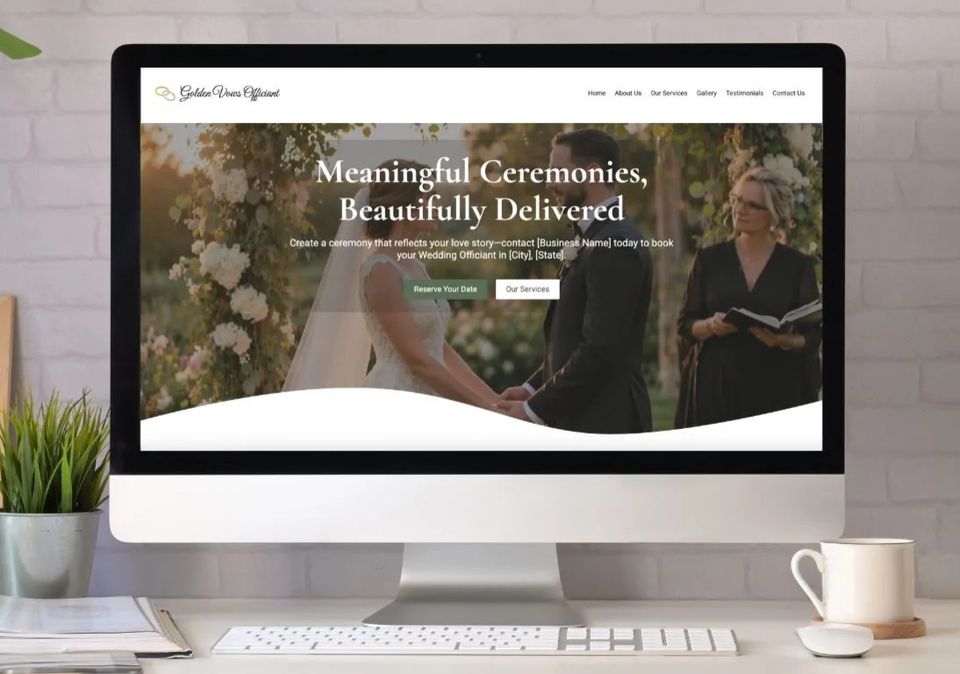
One of the easiest ways to create professional websites for wedding officiants is to start with SiteSwan's pre-built Wedding Officiant Theme.
Rather than designing every website from a blank canvas, you can begin with a professionally structured foundation and customize it for each client.
The theme can be personalized with:• Brand colors and fonts• Professional photography• The officiant's biography• Ceremony services• Testimonials• Service areas• Calls-to-action• Custom content and SEO-focused pagesThis allows you to create a website that feels unique to the officiant without spending hours developing the same basic structure for every project.
SiteSwan's industry-specific themes can give web designers a significant advantage by making it faster and easier to create professional websites for wedding officiants.
Marketing Your Web Design Services
When marketing your services, don't focus only on the fact that you build websites. Focus on what a better website can help an officiant accomplish.
Your messaging can emphasize benefits such as:• More consultation requests• Greater credibility• Stronger personal branding• Better local visibility• A more professional first impression• An easier way for couples to learn about their servicesPositioning yourself as a specialist in wedding officiant web design can also help differentiate you from general web designers.
Cold calling and email outreach can work, but don't overlook the power of in-person networking in the wedding industry. Bridal showcases, wedding expos, venue events, and vendor networking opportunities can give you direct access to potential clients.
You can also create niche-specific marketing materials featuring wedding officiant website examples, website audits, redesigns, and explanations of how better website design can improve the customer experience.
The more you demonstrate that you understand the wedding industry, the less you look like a generic website vendor. Closing the Deal and Delivering Results
Closing a website deal starts with understanding the officiant's business rather than immediately presenting a list of design features.
During a consultation, ask about their ideal couples, the types of ceremonies they offer, where they work, how clients currently find them, and what they dislike about their existing website.
Then connect your recommendations to their goals.
For example, if most of their business comes from referrals but their website doesn't showcase testimonials or recent ceremonies, explain how improving those areas can give referred prospects more confidence before they reach out.
Consider offering tiered website packages based on the client's needs and budget. Clearly explain the deliverables, timeline, revisions, pricing, and launch process so the client knows what to expect.
A strong client experience can also create additional opportunities. Wedding professionals tend to work closely with one another, so a satisfied officiant may refer you to another officiant, planner, photographer, venue, or other vendor.
Conclusion: Start Selling Websites to Wedding Officiants
Wedding officiants can be a strong niche for web designers who want to build a specialized business serving local professionals.
By creating a specialized wedding officiant website package and using SiteSwan's Wedding Officiant Theme to streamline production, you can spend less time building each website from scratch and more time finding clients and growing your business.
The key is to sell more than a website. Sell a better first impression, a stronger online presence, and a professional home base that helps wedding officiants turn interested couples into inquiries.
With the right niche strategy and a repeatable process, wedding officiants can become a valuable niche for building a profitable and scalable web design business.